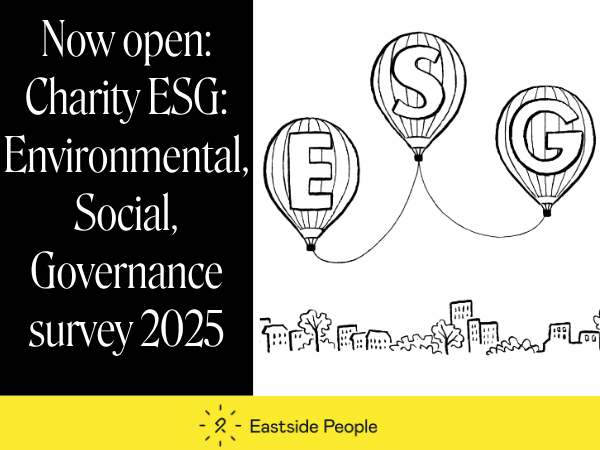
UK’s only Charity ESG Survey: At a time when UK charities face mounting pressures and regulatory complexity, clarity and prioritisation have never been more critical.
The survey reveals that only 5% of participating organisations have a holistic ESG strategy with charities having to choose where to focus their time and budgets with 43% describing their ESG reporting in their most recent annual report as ‘minimal’.
The profound financial pressures facing organisations in the sector are forcing many to deprioritise everything beyond their core activities and regulatory requirements. In this context, many organisations said that while they want to do more to mitigate their negative environmental impact, they have relegated this to a ‘nice to have’.
As a result, they are placing greater emphasis on social factors – particularly staff wellbeing – and governance practices, while environmental concerns take a secondary role.
86% said they either have a basic ESG strategy that is a ‘work in progress’ (36%), or don’t yet have an ESG strategy, but are ‘considering developing one’ (50%). This indicates a broad-based buy-in for ESG as a concept across the sector but highlights the difficulty of developing and implementing a holistic strategy with only one organisation describing it as ‘fully integrated’ into their organisation.
The confusing landscape of overlapping approaches was identified as a top challenge for participating organisations with over 100 external, ESG-related accreditations, standards, frameworks and marks reported as being in use. Despite this, they said they want and need more charity-facing support, resources and guidance, to help them take an integrated, strategic approach to ESG.
On the positive side, the not-for-profit sector leads by example on staff wellbeing, prioritising staff experience and innovating to engage staff in all aspects of their organisations. Across the first two years of our survey, staff considerations have emerged as a clear ESG priority for participating organisations with 92% rating it ‘very important’ and an area where they report making greatest progress.
Nearly three-quarters (74%) of organisations are currently paying at least the Real Living Wage to all staff (unchanged from the 2024 survey), but there remains a significant minority (26%) unable to do this. Smaller charities in particular acknowledge that the need to preserve funds to prioritise impact on beneficiaries means pay levels cannot compete with other sectors.
Participating organisations did consider it important to take a strategic approach to understanding the social impact of their activities with 97% rating it important (19%) or very important (78%) to gather evidence on the difference they make. While 64% consider it very important to reflect on this evidence and use it for decision making purposes, there is a recognition that there is more they can do to measure, understand and improve their impact on beneficiaries.
While 96% of participating organisations said that it was important to have a theory underpinning how they make an impact, only 23% had a current theory published on their website and only 55% said their progress developing a theory for how they make an impact was ‘advancing’ or ‘advanced.’ Overall, having a theory and understanding of social impact is however, considered a lower priority than staff considerations with fewer participating organisations rating their wider contribution to the community as very important. That said, our survey data does indicate that most organisations do regard their wider contribution to the community as relevant and important – 36% considered it ‘important’ and 48% considered it ‘very important’, while only 1% of participating organisations said it was ‘not important’ to them.
However, when it comes to Equity, Diversity and Inclusivity (EDI), participating organisations’ progress in embedding it across their organisations significantly lags its importance rating. Almost a quarter (24%) of participating organisations had no-one from Black, Asian or other racially minoritised communities on their senior executive leadership team or board.
From a governance perspective, the Charities Statement of Recommended Practice (SORP) *2 updates which will apply to accounting periods starting on or after 1 January 2026 encourages all charities to provide a summary of how they are responding to and managing environmental, social and governance matters. Worryingly, 85% of respondents said that they were either unaware, or only somewhat aware, of the anticipated updates to the (SORP) with just 15% reporting being ‘very aware’.
When looking at trustee boards, 40% of all responding organisations had at least 1 Trustee who had served more than the recommended maximum tenure of 9 years. In addition, only 47% of large organisations (income >£1m) had undertaken an independent review of board effectiveness within the last three years despite these actions being recommended practice under the Charity Governance Code*3
“Eastside People’s tool is unique in that it enables individual charities and not-for-profit organisations to input their own ESG data and receive individual and comparative feedback about their progress and is completely free of charge.” Said Richard Litchfield, CEO of Eastside People. “Our goal is to galvanise not-for-profit organisations to continue to drive progress in these areas and remain at the fore of the changes we believe are right for our society.”
“The annual reporting tool (which was open for completion by charities and social enterprise across the UK from May to July 2025), *1 complements existing ESG frameworks and standards and aims to be a starting point for more collaboration, peer-support and shared learning across the sector.”
“These findings reflect what many of our members are experiencing day to day: charity leaders recognise the importance of ESG, but the reality of financial strain and regulatory complexity often means tough decisions about where to focus limited time and resources. Yet even within these constraints, the sector continues to lead the way on social responsibility, particularly around staff wellbeing. ACEVO is proud to partner in work that brings greater coherence, practical guidance and collective ambition to the ESG agenda, ensuring leaders are equipped to build resilient, ethical and future-focused organisations.” Jane Ide, CEO ACEVO
Quotes from survey participants
- “Over the past year, we’ve watched corporate funding for LGBTQ+ charities contract at an alarming rate. It Gets Better UK has experienced significant losses.” Alex Rhys, Chief Executive of It Gets Better UK,
- “We are very grateful for the survey being free and high quality. We wanted to learn more about ESG because we recognise its increasing importance. It’s helped us to assess where we are, benchmarking ourselves against others, and understand next steps. It’s also helped us to recognised where we have existing strengths.” Dr Wayne Full [British Psychotherapy Foundation]
- “We found frameworks for assessing where we were on ESG matters didn’t fit well for a charity (e.g. B Corp is just “not for charities”), so we were pleased to have something relevant that guided self-assessment.” Dan Oaker, [Deputy Director – Finance & Resources, National Children’s Bureau].
The next round of the Eastside People ESG survey will open for completion between Tuesday 26th May to July 24th 2026. *4
Notes:
*1: The ESG survey is an annual reporting tool, with a yearly reporting window, when organisations can return to the assessment, using it to record and reflect on their progress year on year. Report data and analysis can be shared with leadership teams, boards, donors and funders, who will be able to use the findings to identify key areas where more proactive approaches and additional resources are needed.
This is the second year that we’ve offered our free, online ESG survey to the not-for-profit sector. Last year, we launched this new tool to address an evident need for more tailored support and resources, to help organisations in our sector review and develop their ESG practices.
The tool was open for completion from 27th May to 25th July 2025, with only minimal changes to the survey content.
75 not-for-profit organisations completed this round of the ESG survey of which 63 were doing it for the 1st time. These organisations range in size from micro-organisations, to small, medium and large charities. The largest organisation has an income of £151m million, while the smallest grassroots organisation had income of under £14K, 54 were large organisations with income >£5m and 37 had income <£1m and 2 had an income of less than £50K.
In total there have been 141 submissions from organisations with a combined income of £1,263m servicing 19 different beneficiary groups including adults, socially disadvantaged individuals and groups, children and young people.
*2: Charity SORP https://www.charitysorp.org/
*3: Charity Governance Code: https://www.charitygovernancecode.org/en/5-board-effectiveness?
*4: Survey sign up: https://eastsidepeople.org/resource/esg-assessment/
Key statistics:
- How many organisations participated in the survey?
In its first year, 78 not-for-profit organisations participated in what we believed to be the first such tool, designed specifically for charities in England and Wales. This year, we are delighted that the ESG survey has continued to gain momentum, with 63 additional organisations taking part.
- Why did organisations participate in the survey?
- 81% wanted to better understand where they are at the moment, and what their next steps should be
- 66% of organisations wanted to benchmark themselves against others and/or plug into a network for best practice and support
- 5% of participating organisations have a holistic ESG strategy
- A further 86% either have a basic ESG strategy that is a ‘work in progress’ (36%), or don’t yet have an ESG strategy
- Of the 5% that do have a holistic ESG strategy, only one organisation described this as ‘fully integrated’ into the organisation
- 43% of participating organisations described the ESG reporting in their most recent annual report as ‘minimal’
- Almost a quarter (24%) of participating organisations had no-one from Black, Asian or other racially minoritised communities on their senior executive leadership team or board
- 85% of respondents said that they were either unaware, or only somewhat aware, of the anticipated updates to the SORP with just 15% reporting being ‘very aware’.
- Equity, diversity and inclusivity: 99% of participating organisations rated this ‘important’ or ‘very important’) with average progress in this area (2.6/4) significantly lagging behind average importance (3.8/4)
- Nearly three-quarters (74%) of organisations are currently paying at least the Real Living Wage to all staff (unchanged from the 2024 survey), but there remains a significant minority (26%) unable to do this
- Staff considerations have emerged as a clear ESG priority for participating organisations with 92% rating it ‘very important’ and an area where they report making greatest progress.
- Nearly three-quarters (74%) of organisations are currently paying the Real Living Wage (unchanged from the 2024 survey), but there remains a significant minority (26%) unable to do this.
Read what the charity press had to say about the charity ESG research
- Civil Society Media: Financial pressures are hampering charities’ climate progress, research finds
- Charity Times: One-in-four-charities-have-no-global-majority-leaders according to latest research
- Third Sector: Most charities not fully aware of SORP changes, study finds
Sign Up for the 2026 ESG Survey
Read the 2025 ESG Survey Report:
Download 2025 ESG Survey Report
We also offer a service to help your charity assess the materiality of each aspect of ESG, and develop a strategy and an action plan focused on your priorities: Environmental, Social & Governance (ESG) Consultancy. Please do get in touch if you would like to discuss how we can support your organisation.