Eastside People Good Merger Index Launch Webinar 2026 Questions and Answers
This is a summary of the questions that were asked by attendees from charities and other not-for-profit organisations to our merger experts and panellists (from Eastside People, Coram PACEY, TLC: Talk Listen Change, and Bates Wells) during our March 2026 Good Merger Index launch. The event reviewed and discussed merger data across the charitable sector in England and Wales and answered questions about the charity merger market in general.
- What data do you have on the weighting of contributing factors (e.g. financial data etc.) that are driving ‘mergers for survival?
We compile the Good Merger Index through measurement and analysis of the publicly available data on mergers completed in the relevant time period (this year, between 1st May 2024 and 30th April 2025).
We use two main sources for our research – public registries and media and organisation websites. In most cases, there is sufficient publicly available information for us to identify the financial value of the organisations involved, and of the merger deals themselves, the timing of the deal and the type of merger that has taken place.
Beyond this, our quantitative analysis of trends in the data can give an indication of how the financial context and wider environment may be impacting organisations’ drivers to merge. But in most cases, without being directly involved in a merger, it isn’t possible to know enough about the contributing factors to weight these. So instead, the report highlights any notable data trends, and where we consider it appropriate, we include our hypotheses on the connection between drivers and trends – but this is essentially speculative.
For example, this year, we noted a high number (and proportion) of mergers classified as takeovers. We also noted that when an organisation is looking for safe harbour, the merger is more likely to be a takeover. Drawing these two points together, we speculated that this year’s figures may indicate that more smaller organisations are financially distressed prior to merger (and are therefore looking for safe harbour).
- Did you filter findings by type (e.g., international development) and are mergers concentrated in particular geographical areas?
As part of our analysis, we do filter the data in several ways to look for trends – and where we find a notable trend, we include this in the Good Merger Index. This year, the proportion of mergers among charities working outside England and Wales was in line with previous years. In terms of geography, we did not spot any notable variance between the concentration of charities across the country, and the distribution of mergers.
We should also add that while there is generally a lot of information available about mergers involving larger, public-facing charities, a significant proportion of mergers each year take place between smaller charities that have since been removed from the charity commission’s register, and about which there is little publicly available information. This significantly limits our ability to filter the data and identify trends across the full data set.
- Has anyone analysed how consolidation is impacting regional distribution of organisations?
This did not form a specific part of our analysis, and we are not aware of anyone else who has conducted such analysis. That said, we are monitoring trends among federated charities, and other national charities with a local branch model. Among these, we are seeing a multi-year trend towards consolidation at the local and regional level, through merger between neighbouring branches of charities. In addition, in some specific areas of the sector, we are seeing a move towards consolidation both regionally and nationally. While the information we have does indicate a shift in distribution within regions, at local levels, it does not indicate a significant distribution shift between regions.
- Takeover is simplest. How could other models be made easier (governance/legal ‘red tape’)?
It is certainly the case that the legal mechanics of a takeover are relatively straightforward, compared to other models (Learn about the 5 types of charity merger and their benefits in our Charity merger Guide). To some extent, the increasing levels of complexity among other models are inherent to their structure – for example, the subsidiary model, by definition, requires the added legal and governance complexity of a group structure, at its simplest – a parent and subsidiary.
However, there are ways of navigating the process that can mitigate some of the challenges associated with this greater complexity – both in the preparation stages and post-merger. Our Charity Merger Guide: Tips, Strategies, and Best Practice is a good place to start, when thinking about how to prepare for merger, and avoid some of the more common pitfalls along the way.
- What gets lost in a ‘takeover’? Impact on small/grassroots/‘by and for’ orgs?
While each merger – and each takeover – is different, they often do have certain characteristics in common. In a takeover, the smaller charity gets absorbed into the larger organisation – which generally means that it is legally dissolved and becomes part of that organisation.
In terms of benefits, a takeover can allow the smaller charity’s mission to continue, within a stronger organisation that provides the economies of scale and increased efficiency that keep it viable. However, fundamentally, the smaller charity no longer exists – and this may mean that not only is it now led by the leadership of the larger organisation, but its standalone identity will go, and its brand may either be diluted or also disappear.
This can result in a loss of local authenticity, community trust and nuance in programme delivery. That said, none of this is inevitable. There are ways to mitigate these risks, through discussion and reaching agreement on how to manage these in advance. For example, parties may agree the extent to which local brands/sub-brands will be protected post-merger, personnel will remain in key roles, and budgets will be devolved.
Other mitigations may include retaining local advisory groups and codified co-production, at the local level, post-merger. Underpinning all of this, is the question of cultural compatibility. It will be of immeasurable advantage to partner with an organisation that has similar values (and not just on paper!). For this reason, we strongly advise organisations to explore cultural compatibility in initial discussions and through a merger feasibility study.
- Do the same principles apply for mergers between a UK charity and an international organisation?
Expect extra layers: cross‑border structuring, beneficiary safeguarding across jurisdictions, foreign A non-governmental organisation (NGO) registrations, fund transfer rules/sanctions, and sometimes Companies House cross‑border merger processes (for company forms) and/or a parallel registration in the partner’s jurisdiction.
If Scotland/OSCR is in play, consents differ (use local regulator timelines). Brodies’ practical note on implementation/consents is a good checklist. [Brodies – implementation and transfer agreement (includes OSCR)]. Use the Charity Commission’s framework for merging charities in England & Wales as your base map.
- Given the Charity Commission’s stated 16‑week response time, what’s the best way to plan timelines?
Charity mergers do not usually require formal approval from the Charity Commission, but the Commission may need to be involved at certain stages – so it’s a good idea to build in contingency for Commission involvement.
Register of Mergers: Make sure your merger documentation is ready for submission to the Charity Commission’s Register of Mergers. Registration is usually voluntary, but it helps protect future legacies to the original charity (and is required in some cases). [See Guidance on the Register of merged charities].
- Are collaboration trends being analysed as early signals of consolidation?
While close collaboration is often a precursor to a more formal partnership, it is very difficult to identify or monitor sector-wide collaboration trends in general. Non-merger collaboration is very wide in scope – from joint ventures and contract-based alliances to non-contractual arrangements based on good relationships and trust.
There is sometimes little, if any, formal public record of such collaborations, so without undertaking specific, long-term research into this area, we (and anyone else looking for trends) can only ever base our sense of sector trends in this area on the charities we are working with directly, and anecdotal information. With that in mind, there is some, limited, longitudinal research by the Community Foundation North East on Third Sector Trends in England and Wales, Relationships, influencing and collaborative working that looks specifically into this.
- Has anyone used a coproduction approach to merger (incl. beneficiary decision making)?
Yes – in practice you’ll see structured co‑production in discovery and integration planning (co‑designed service blueprints; beneficiary panels shaping the Target Operating Models (TOM)). Organisations can and do take a co-production approach to merger.
This works best when organisations that are already taking a co-production approach to their decision-making use the pre-existing structures to make decisions on the merger. That said there will be times in any major financial transaction, where decisions may need to be made quickly and there need to be clear leadership structures and clarity of roles and powers that will allow for this.
- What sort of financial costs are incurred?
We recommend early scoping of costs to help avoid delays later in the process.
i. Typical one‑offs we budget for (ranges vary by size/complexity):
- Legal (see examples below)
- HR/TUPE & pensions advice
- Finance/tax
- Due diligence
- Project management/Project Management Office
- IT & data migration/CRM/new tools and systems or additional licences
- Brand and communications
- Consultation events.
ii. Other staff-related costs that are often underestimated:
- Potential redundancy costs
- Harmonisation of pay/terms
- Pension deficit implications.
iii. Ongoing / post-merger costs that may not be incurred as single one-off amounts:
- Dual running costs during transition (systems, teams, governance overlap)
- Integration costs over 6–12 months post-merger.
iv. Governance and regulatory costs:
- Changes to governing documents
- Potential Charity Commission applications/consents
- Board development / recruitment.
v. Contingency
We would recommend having a contingency budget (mergers almost always throw up surprises no matter how thorough your planning and due diligence).
- If you’re a small charity in difficulty, how do you balance honesty about finances with showing strengths?
Lead with mission protection and benefit to beneficiaries, backed by evidence of impact and assets (programmes that work, relationships, local trust). Be transparent about the financial driver and your board’s duty‑led process (options appraisal; why merger is best‑value path).
- Has the impact of increased National Insurance been a driver of rising costs?
Sector body NCVO flagged material cost pressure from the 2024 Budget’s employer National Insurance Contribution (NIC) increases, estimating ~£1.4bn p.a. additional cost to the sector (from 2025/26), alongside the higher National Living Wage.
The CFG survey on NIC impact (2025) found that:
- 82% of respondents were concerned about affordability
- 69% were reducing or planning to reduce headcount
- 41% were cancelling services or expansion.
We are not suggesting NIC as a single causal factor, but it’s part of the current cost environment that correlates with rising merger activity.
In his Blog – Five Trends for Charity Leaders in 2026, our CEO Richard Litchfield highlights the political, economic, cultural and technological forces that are shaping today’s charitable sector.
- Is there a way to find charities interested in mergers beyond one’s own networks?
Yes definitely, practical routes we use:
- Criteria led partner searches (market mapping against service fit, culture, geography, reserves, governance readiness)
- ‘Honest broker’ outreach to create safe, confidential conversations at Chair/CEO level
- Considering the long tail of post‑merger effort, how can the benefits be sustained?
We’ve found three things most predictive of success:
- A clear 100‑day plan with only a few must‑win actions (governance, finance ops, payroll/HRIS, brand/CRM clear Communication plan. In our case study and video covering the Bedford Daycare Hospice and Keech Hospice Care merger, CEO Liz Searle highlights the importance of everyone getting behind their “Reasons to believe” document
- A people & culture roadmap (leadership model, consultation rhythm, culture themes, values‑to‑behaviours). Read top tips on merging a charity from Paul Townsley, CEO and Carolyn Regan, Chair Waythrough
- Benefits tracking owned by the board (service outcomes, reach, unit costs, staff retention). Find out what Trussell and Shaw Trust measured after the divestment of the Trussell Retail Arm to Shaw Trust.
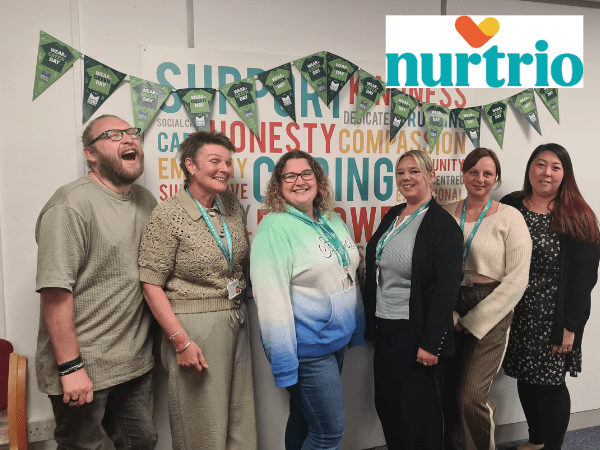
Our case study covering the merger of NAViGO Extra and Ace Homecare with charity Care4All to become a new charity Nurtrio has some great tips on things to focus on post merger.
- Do you reflect on mid/long term success of mergers? Is the sector ‘better’ at cultural due diligence than corporate M&A? What are the checklists we should use over and above financial ones?
While the Good Merger Index research and analysis does not include an assessment of the level of ‘success’ of any mergers, post-completion, each report includes a number of case studies that do cover longer term success. These case studies and more merger and partnership stories and blogs full of advice and tips are available in the merger section of our website.
In most cases, there is sufficient publicly available information for us to identify the financial value of the organisations involved, and of the merger deals themselves, the timing of the deal and the type of merger that has taken place.
Beyond this, certainly for mergers between smaller organisations, there may be very little publicly available information. Therefore, without conducting a specific, longitudinal study, we can’t determine the relative ‘success’ of all the mergers captured in our data. Similarly, without conducting a specific study, we’d be cautious of making any general statement comparing the charity and corporate sectors.
We do recommend using a whole‑organisation due diligence scope alongside finance covering:
- Governance
- People & culture
- Safeguarding
- Quality/regulatory, contracts & commissioning
- Estates/IT/data
- Intellectual Property and brand
- Fundraising/CRM
- Pensions & TUPE
- Risk and insurance.
Be transparent, share the scope/method, agree document rooms, record findings by severity, share with both boards, and minute trustee decisions against risks. Charity Commission guidance supports this boards’ duty‑centred approach.
Our merger experience gives us a clear understanding of the building blocks for post-merger success – you can read more about how to achieve successful post-merger integration in our Charity Merger Guide.
- How did you manage 7 mergers/takeovers in a short timeframe? Question to Michelle Hill, the Founder and Group Chief Executive of TLC: Talk Listen Change,
I’d probably start by saying it didn’t feel like managing seven mergers in a neat, controlled way — it felt much more dynamic than that.
A big part of how we made it work was having an amazing Board. They were ambitious for impact but also grounded, supportive, and willing to lean into complexity with us. That combination of encouragement and challenge created the conditions for us to move at pace without losing our judgement.
We also used a Joint Collaboration Board approach, which was genuinely pivotal. Rather than “doing mergers to” organisations, we created shared governance spaces early on. That helped build trust, enabled honest conversations, and meant decisions were shaped collectively rather than imposed. It reduced friction and helped everyone feel part of something being built together.
Alongside that, we were really disciplined about having a shared project plan. With multiple organisations involved at different stages, clarity was essential — what needed to happen, who was responsible, and when. It gave us a backbone to hold the complexity, while still allowing for flexibility when things inevitably shifted.
But honestly, the biggest factor was brilliant colleagues. People who were committed, values-led, and willing to go above and beyond — often while holding their day jobs as well. The quality of leadership across the system made a huge difference.
And finally, a sense of humour. You need it. When you’re navigating uncertainty, complexity, and the occasional curveball, being able to laugh together keeps relationships strong and helps you stay resilient.
So, it wasn’t one thing — it was governance, structure, culture, and people all working together.
- Chairs’ involvement—examples of Chairs/trustees leading or starting conversations?
Chairs often start informal conversations with other Chairs, but the key is to involve the Board and the CEO if conversations progress past an initial conversation.
Best practice during the process is a small merger steering group chaired by a trustee/Chair with CEO(s) present.
- When Administrators are involved, how do Boards ensure value of a charity merger is preferred over ‘best price’?
Bring Administrators and major creditors into an orderly options assessment early, substantiating going‑concern value for beneficiaries (service continuity, workforce, contract novation) and risk reduction versus asset break‑up. And be sure to have a clear communications plan.
- What if you don’t have a pot of money set aside?
Plan for a lean pathway: concentrate spend on legal/due diligence and run a phased integration. Target external merger support from key funders/commissioners and build a minimal viable integration. Our Charity Merger guide covers all the steps you need to follow to go through a merger process.
- We’re considering a merger of local infrastructure organisations (Local Government reform is a driver). Have you experienced this?
Yes—this is a common scenario. As a top-level reply:
- Be explicit on geographies vs. place‑identity
- Be clear on membership models
- Ensure you have representational voice
- Commissioned infrastructure contracts be clear who holds them post‑reform.
You can use a merger of equals or group structure to retain place‑based influence while achieving back‑office economies.
Read our Charity Merger Guide: Everything you need to know about merging a charity.
Read the Charity Merger Guide
Find out more about our merger and partnership services for charities and not-for-profit organisations.